Why Togo Grain Varies Across Authentic and Replica Bags
Togo is easy to recognize as a family and surprisingly difficult to reduce to one “correct” texture. Place several Togo bags side by side and the grain may look tight on one, more open on another, softly veined on a third, or slightly different from panel to panel. That variation can appear on authentic bags, on replica bags, and even across pieces made in a similar period.
The useful question is therefore not, “Does every pebble match one reference photo?” A better question is, “Does the leather show a coherent full-grain character, behave naturally on the bag, and work with the construction as a whole?” This approach makes a Togo grain comparison more practical and less anxious without pretending that texture alone can establish origin.
Start with what full-grain variation means
Hermès describes its leather as full grain, meaning the upper surface is retained rather than completely corrected away. Its official leather-care material notes that wrinkles, veins and pores are among the natural characteristics that can remain visible. That is an important foundation: natural grain is not expected to behave like a printed grid.
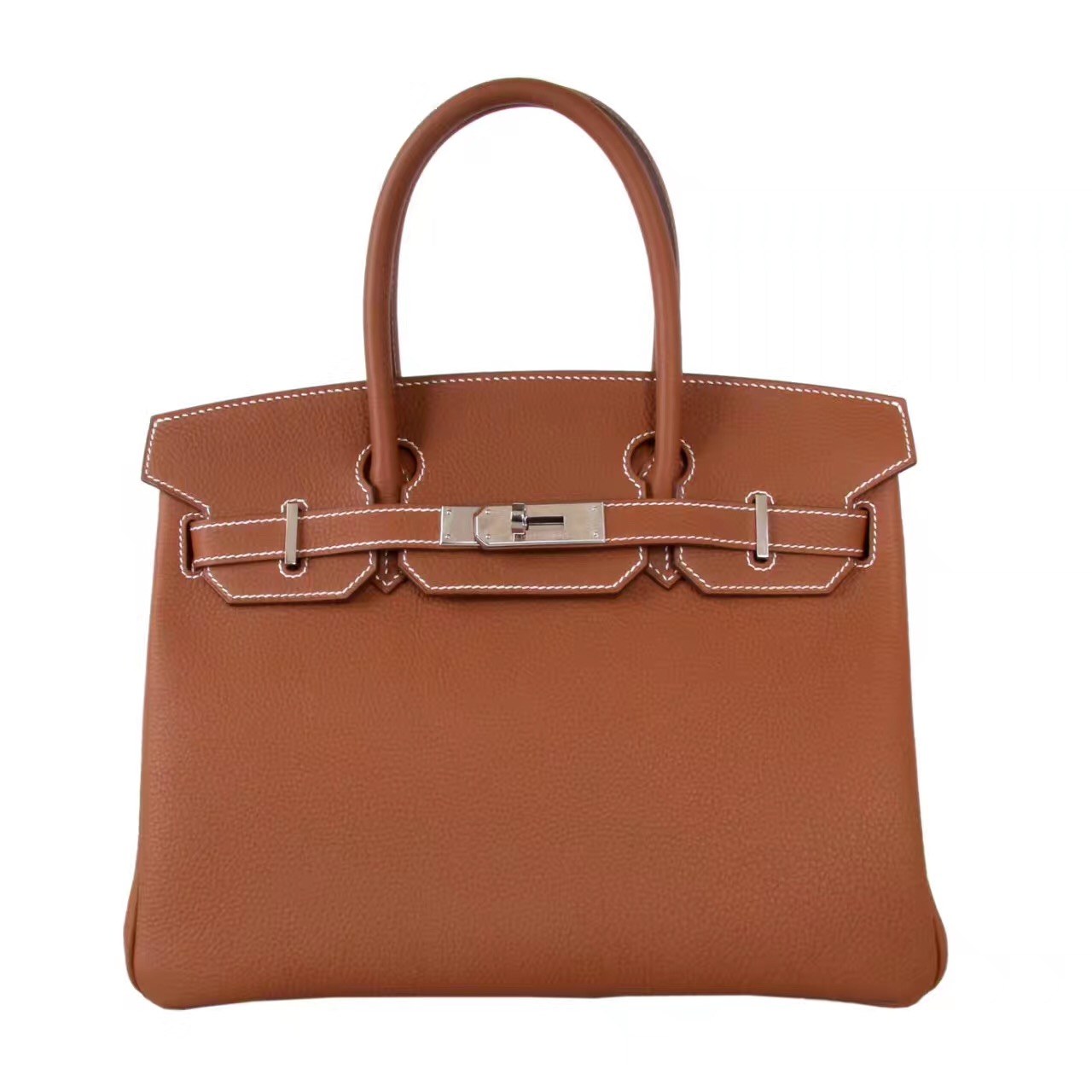
Togo is generally recognized for a rounded, pebbled surface, useful softness and enough body to support structured bag designs. Within that description, however, individual hides are not identical. Grain cells can be smaller or larger, valleys can appear shallower or deeper, and subtle veins may cross some areas but not others.
This does not mean every texture should automatically be accepted as Togo. It means the review should begin with a realistic range rather than one frozen sample.
Why two authentic Togo bags may not look identical
1. Every hide begins with its own surface
A hide is biological material. Age, growth, natural skin structure and the location being viewed all contribute to what remains visible after tanning and finishing. Even when a tannery works to a defined specification, it is selecting and finishing natural material rather than manufacturing identical sheets.
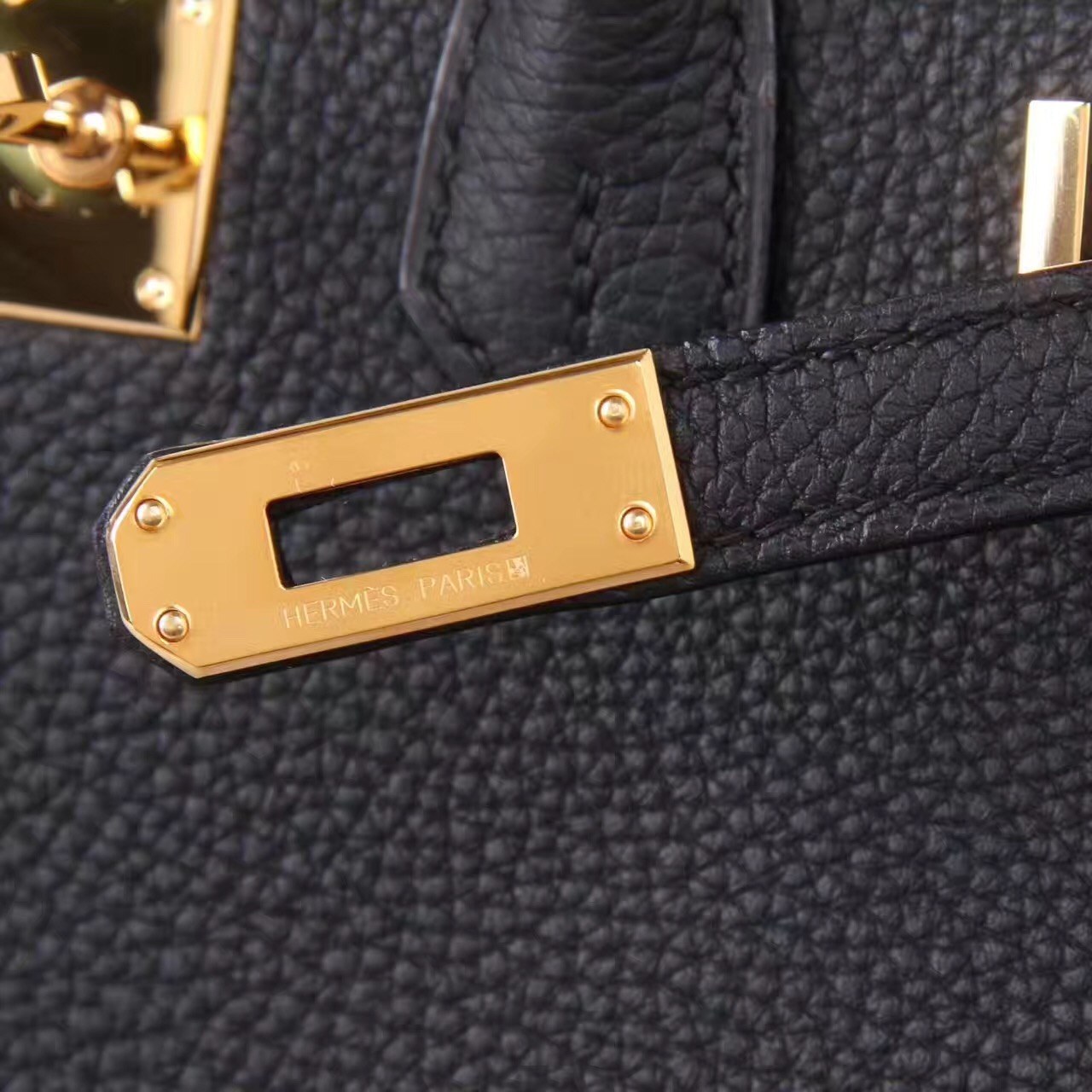
The center of a hide may present differently from areas that experienced more movement. A panel cut from one region can therefore show a different grain rhythm from a panel cut elsewhere. On a finished bag, the front, gusset and base may be related without looking perfectly cloned.
2. Cutting position changes the visible pattern
Large panels reveal more of a hide’s geography. Small panels isolate a narrower section. This is one reason a compact Birkin 25 and a larger bag can create different first impressions even when both are described as Togo.
For visual context, compare the compact proportions of a Craie Togo Birkin 25 with a darker Noir Togo Birkin 25. These listings are useful as color and product references; photographs alone cannot independently verify leather identity or explain every surface difference.
3. Tanning and finishing influence grain expression
The grain visible in the final bag is affected by more than the raw hide. Tumbling, moisture, heat, dyes, oils, finishing coats and mechanical handling can influence how open, rounded or crisp the surface appears. A batch can remain within the same broad leather specification while presenting a slightly different hand or visual scale.
Color can also change perception. Pale colors make shadows between grain cells easier to notice under side light. Dark colors can compress those shadows in a photograph, while saturated warm shades may emphasize highlights along raised areas. This is a visual effect, not proof that one color has inherently “better” grain.
4. Construction puts the leather under different tension
Leather does not sit flat once it becomes a bag. It is skived, folded, stitched, reinforced and pulled around curves. Grain near a seam may look tighter because the material is under tension. A gusset can appear more relaxed because it is designed to open and move. A handle base may compress the grain differently from a broad front panel.
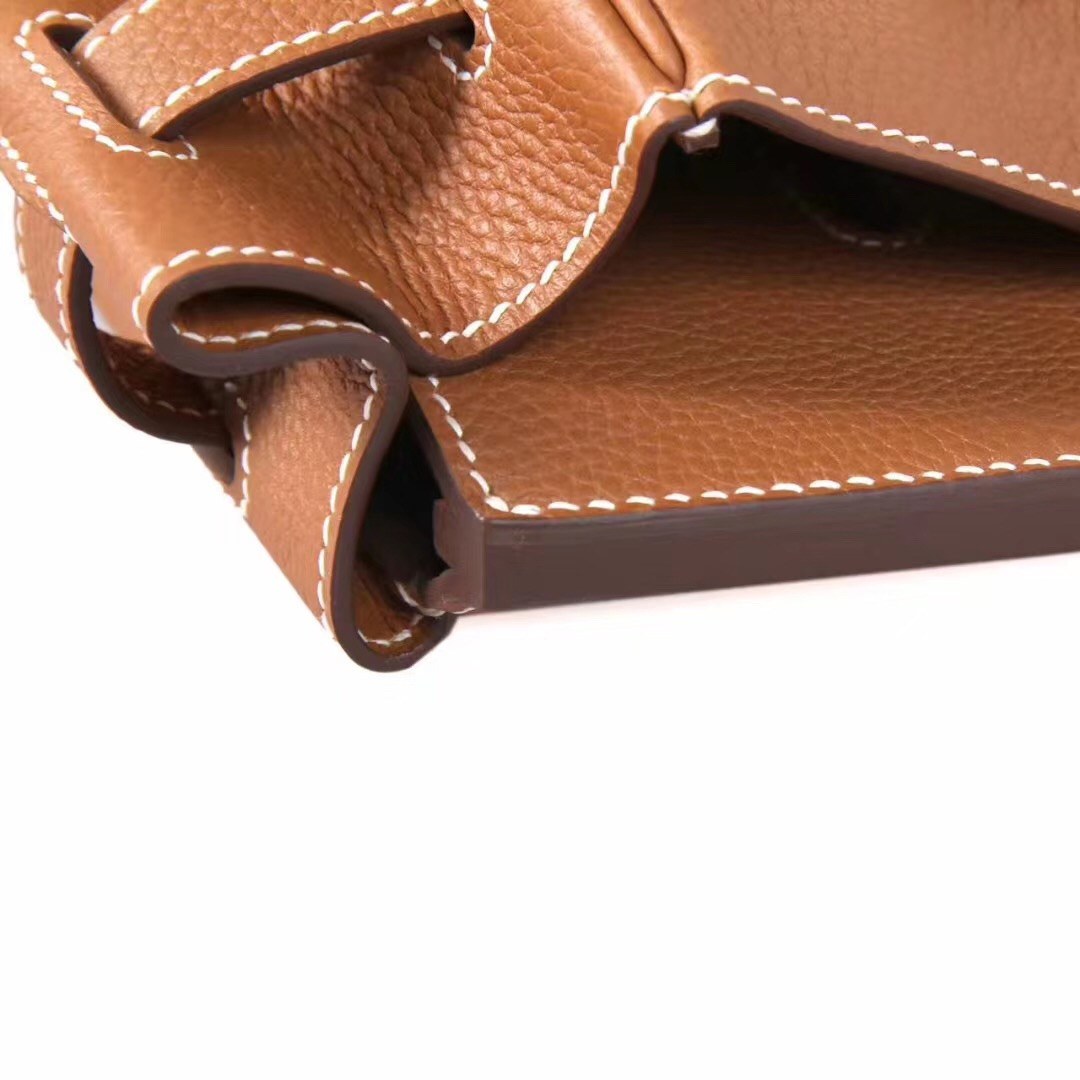
That is why a useful assessment follows the surface across the whole object. It asks whether changes make sense at folds, seams and curved areas instead of demanding one pebble size everywhere.
Why replica Togo varies too
Replica bags introduce another set of variables. Different workshops may obtain leather from different tanneries, select different thicknesses, request different finishing recipes or use different levels of surface enhancement. Even when two sellers use the same broad label, the material may not come from the same production batch.
Some replica leathers may have a naturally pebbled base with additional finishing to make the grain more visible. Others may rely more heavily on embossing. The result can range from organic and irregular to repeated or overly crisp. Yet photographs are imperfect evidence: compression, sharpening and direct flash can make an ordinary grain look much harsher or more repetitive than it does in hand.
Public Reddit discussions reflect this uncertainty. Owners have compared newer and older Togo textures, noting differences in grain size, veining, softness and dryness on both boutique and replica examples. Other image-based discussions show people disagreeing about the same surface. These are valuable observations, but they are individual experiences rather than controlled tests or universal batch records.
The balanced conclusion is that replica grain variation is real, but not every difference has the same cause. Tannery supply, finishing, workshop preferences, color, photography and bag construction can all contribute.
Grain size is only one part of the leather
It is tempting to label small grain as good and large grain as bad. That shortcut is unreliable. A tight grain can still feel coated or stiff. A more open grain can still move naturally and support the intended shape. Veining can add character, but an abundance of sharply repeated “veins” may look artificial when viewed across multiple panels.
A stronger review considers several qualities together:
- Irregularity: Do grain cells vary organically rather than repeating like wallpaper?
- Depth: Do raised and recessed areas respond naturally to soft side light?
- Transition: Does the grain change plausibly near seams, curves and tension points?
- Hand: Does the leather flex and recover in a way that suits the bag?
- Finish: Does the surface look balanced rather than excessively glossy, dry or plastic-like?
- Structure: Does the leather support the silhouette without fighting it?
These observations describe material and workmanship. They are not a substitute for professional authentication.
How color and lighting change a Togo grain comparison
Online comparisons often place unrelated photographs beside each other. One image may use a wide phone lens and overhead light; another may use a macro lens, sharpening and low side light. The second will reveal stronger valleys and more texture even if the physical leather is not dramatically different.
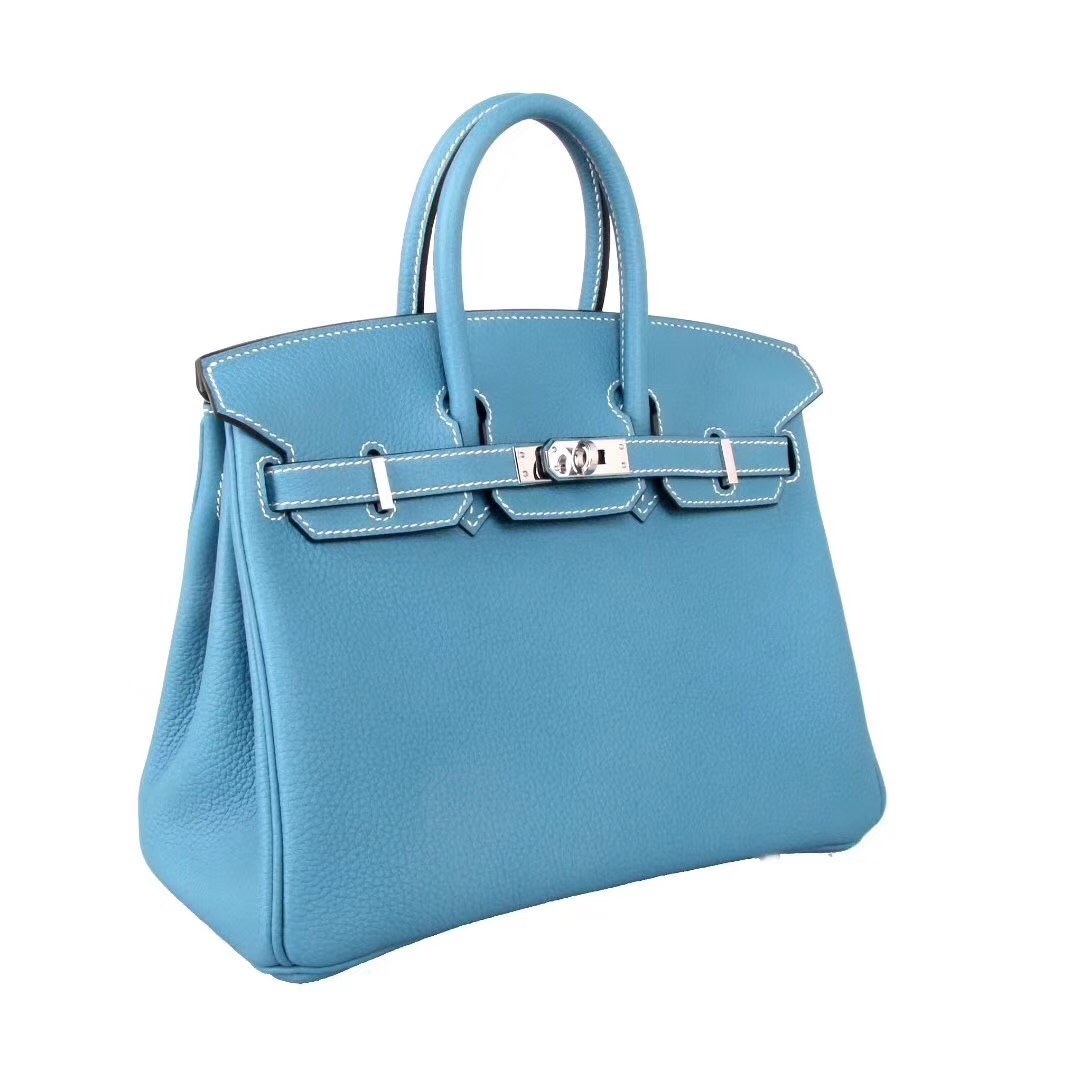
For a fair comparison, use the same camera, distance and light. Photograph the bag straight on, then add one close view under diffuse side light. Avoid extreme digital zoom. Keep exposure and editing consistent.
Neutral and light colors can be particularly useful for studying shadow and depth. The Etoupe Togo Birkin 25 and Gold Togo Birkin 25 offer two catalog references with different tonal effects. Again, the links show how the products are presented by the retailer; they should not be treated as a laboratory comparison.
A six-view method for reviewing Togo grain
View 1: Normal carrying distance
Begin far enough away to see the entire bag. At this distance, grain should support the overall impression rather than overpower it. Notice shape, balance and how light travels across the panels.
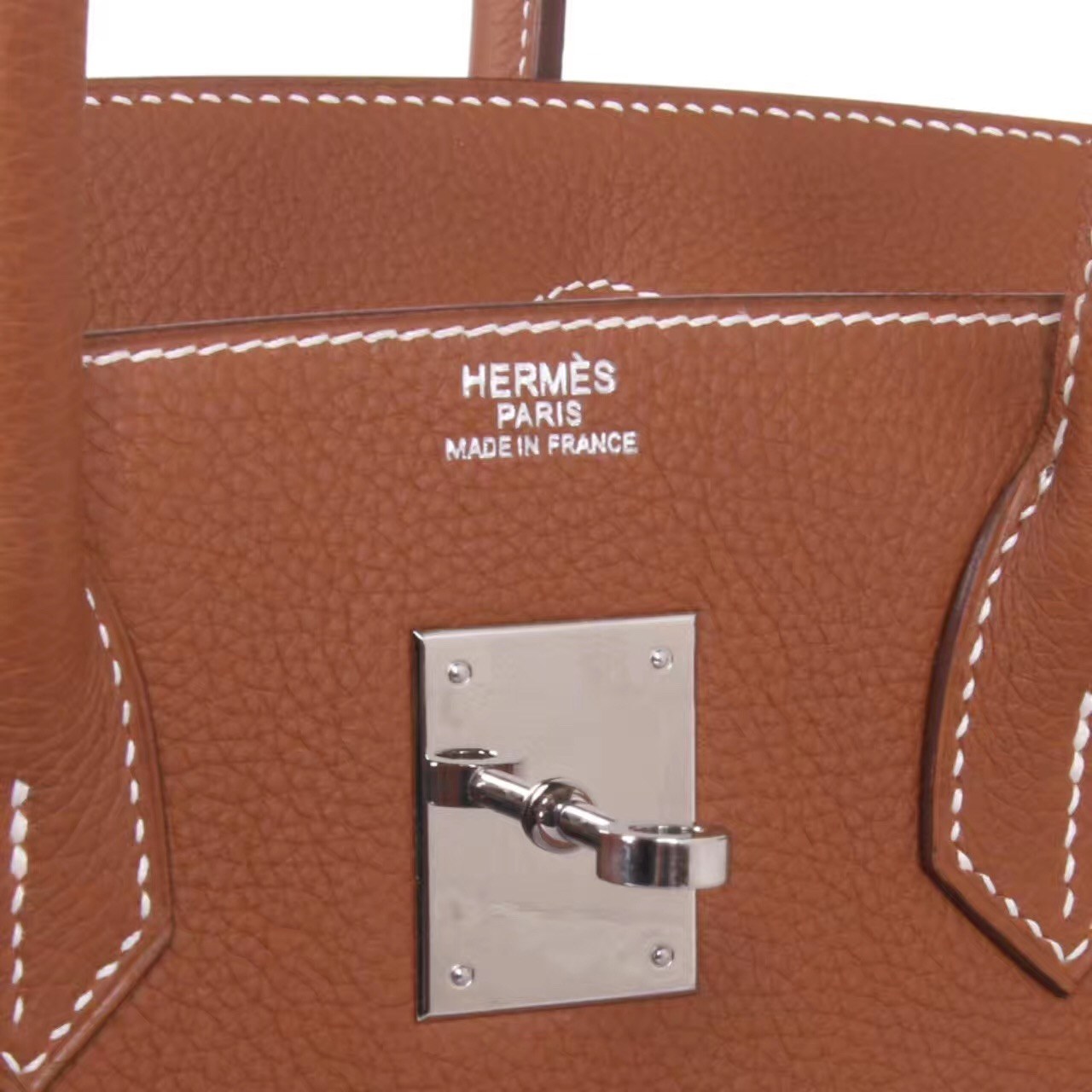
View 2: Straight front panel
Use soft, even light and examine the broadest uninterrupted area. Look for natural variation, not pixel-level sameness.
View 3: Both side gussets
Gussets reveal how the leather behaves when folded and released. Compare the two sides under the same filling conditions.
View 4: Curves and handle bases
Check where tension changes. Slightly tighter-looking grain around curves can be consistent with construction.
View 5: A relaxed area
Observe an area that moves during use. Does it fold with a natural rounded response, or does the finish appear rigid and sharply creased?
View 6: Consistent close-ups over time
Save the same photographs after several months. Handling, settling and surface sheen can change how the grain reads. Long-term comparison is more meaningful when the angle, light and filling remain similar.
Natural variation versus a concern worth examining
Natural variation usually looks connected: grain scale changes gradually, veins do not repeat mechanically, and differences correspond to panel position or tension. A concern is more worth examining when a pattern repeats at identical intervals, the finish masks all natural depth, sharp creasing appears with gentle movement, or unrelated panels behave as if they are entirely different materials.
Even then, avoid making a final judgment from one compressed photo. Ask for a short video in diffuse daylight, close views of more than one panel and a gentle flex demonstration. If origin or value matters, use a qualified professional who evaluates the complete bag rather than one texture clue.
For a broader comparison of how Togo differs from Epsom, Clémence and Swift, see the existing Hermès leather guide. The present framework has a narrower purpose: understanding variation inside the Togo family itself.
Frequently asked questions
Does authentic Togo always have the same grain size?
No. Authentic full-grain leather can show differences among hides, production batches, colors, panels and areas under different tension. Grain size should be assessed as part of a wider material and construction review.
Is larger grain automatically lower quality?
No. Grain scale alone does not establish quality. Flex, finish, recovery, panel transitions and the way the leather supports the bag are also important.
Should every panel on one bag match perfectly?
The panels should feel coherent, but perfect duplication is not the goal with natural material. Some variation can make sense because panels come from different hide areas and experience different construction tension.
Can veining prove that leather is Togo?
No. Veining may occur naturally, but it is not exclusive proof of leather type or origin. It can also be emphasized by finishing, embossing, light or image processing.
Why does Togo look stronger in seller close-ups?
Macro distance, sharpening and raking light deepen shadows between grain cells. Request a normal-distance view and a consistent daylight video before drawing conclusions.
Can Togo grain authenticate a bag?
Not by itself. Authentication requires a whole-object assessment by an appropriate professional. This guide is for appreciating material variation and reviewing quality, not for making authenticity guarantees.
The most useful way to read Togo
Togo’s appeal comes partly from the fact that it is recognizable without being mechanically identical. A good review respects that character. Start with the complete bag, compare several panels, control the light, consider color and construction, and observe how the leather moves.
The goal is not to find one universal pebble pattern. It is to decide whether the grain, finish, hand and structure form a coherent material story—and whether that particular expression of Togo suits your own preference.