Hermès Leather Guide: Togo vs Epsom vs Clémence vs Swift
Choosing an Hermès bag involves more than settling on a silhouette and color. Leather changes how the bag feels in the hand, how much it weighs, how firmly it stands and how visibly it records daily use. The same design can appear architectural in Epsom, quietly relaxed in Togo, soft and tactile in Clémence, or luminous in Swift.
That makes leather one of the most consequential decisions for anyone buying an Hermès bag, particularly on the secondary market where several material options may be available at once. There is no universally superior choice: the best leather is the one that suits the bag’s construction and the owner’s tolerance for weight, slouch, scratches and maintenance.
This Hermès leather guide compares Togo, Epsom, Clémence and Swift across the practical details that matter in ownership, then identifies which works best for the Birkin, Kelly, Constance, Lindy and Picotin.
Togo vs Epsom vs Clémence vs Swift at a glance
| Quality | Togo | Epsom | Clémence | Swift |
|---|---|---|---|---|
| Texture | Irregular pebbled grain | Fine, regular embossed grain | Broad, soft natural-looking grain | Almost smooth, finely grained |
| Structure | Medium | High | Low to medium | Low |
| Relative weight | Moderate | Light | Heavier | Light to moderate |
| Everyday resilience | Excellent balance | Very practical | Durable but prone to slouch | Marks are more visible |
| Scratch performance | Grain disguises light marks | Resists superficial scratches | Grain helps conceal minor wear | Smooth surface shows marks sooner |
| Aging | Softens gradually | Retains a crisp profile | Becomes softer and more relaxed | Becomes increasingly supple |
| Maintenance | Low to moderate | Low to moderate | Moderate | Moderate to high |
These are comparative ownership assessments rather than laboratory ratings. No Hermès leather is scratch-proof or waterproof, and condition will always depend on handling, storage, climate, color and the individual hide.
Hermès Togo leather: the versatile all-rounder
Introduced into Hermès collections in 1997, Togo is calfskin with a matte, rounded and irregular grain. Natural variations can include veins or subtle wrinkles, giving each hide a less uniform appearance than embossed Epsom. Its hand is supple but responsive: it bends comfortably while retaining enough body to support a substantial bag.
Togo is often the safest recommendation for frequent use. Its textured surface helps disguise light scratches, fingerprints and small signs of handling better than a smooth leather. It is not immune to corner rubbing, pressure marks or loss of shape, but ordinary wear tends to blend into the grain rather than dominating the surface.
Weight sits in the middle of this comparison. Togo is generally easier to carry than Clémence, though not as light or rigid as Epsom. Over time it softens and may develop a slightly more relaxed silhouette. Buyers who want permanent, sharply defined panels may prefer Epsom; those who appreciate gentle evolution usually find Togo’s aging attractive.
The leather is especially convincing on a Birkin or a Kelly Retourne. A Hermes Kelly 28 Togo Leather Handbag, for example, illustrates why this combination is so useful: the grain contributes visual depth while the leather complements the Kelly’s softer construction.
Hermès Epsom leather: light, crisp and structured
Hermès introduced Epsom in 2004. Unlike Togo’s irregular grain, Epsom has a fine, regular pattern embossed into the calfskin. It feels firm, holds its shape effectively and has a slightly more polished surface. Color can appear particularly clear and bright because the uniform grain reflects light consistently.
Epsom is the lightest of these four choices, an important advantage when the bag itself is large or the owner routinely carries several essentials. It also resists ordinary superficial scratching well. “Scratch-resistant,” however, should not be mistaken for indestructible. Abrasion, hard impacts and corner wear can still cause permanent damage, while repeated friction may flatten the grain in frequently touched areas.
Aging is controlled rather than dramatically slouchy. Epsom generally preserves clean lines, although dents and creases can be more difficult to blend into its rigid surface. Its firm hand also feels less sensuous than Togo, Clémence or Swift. That is not a quality problem; it is the natural trade-off for shape retention.
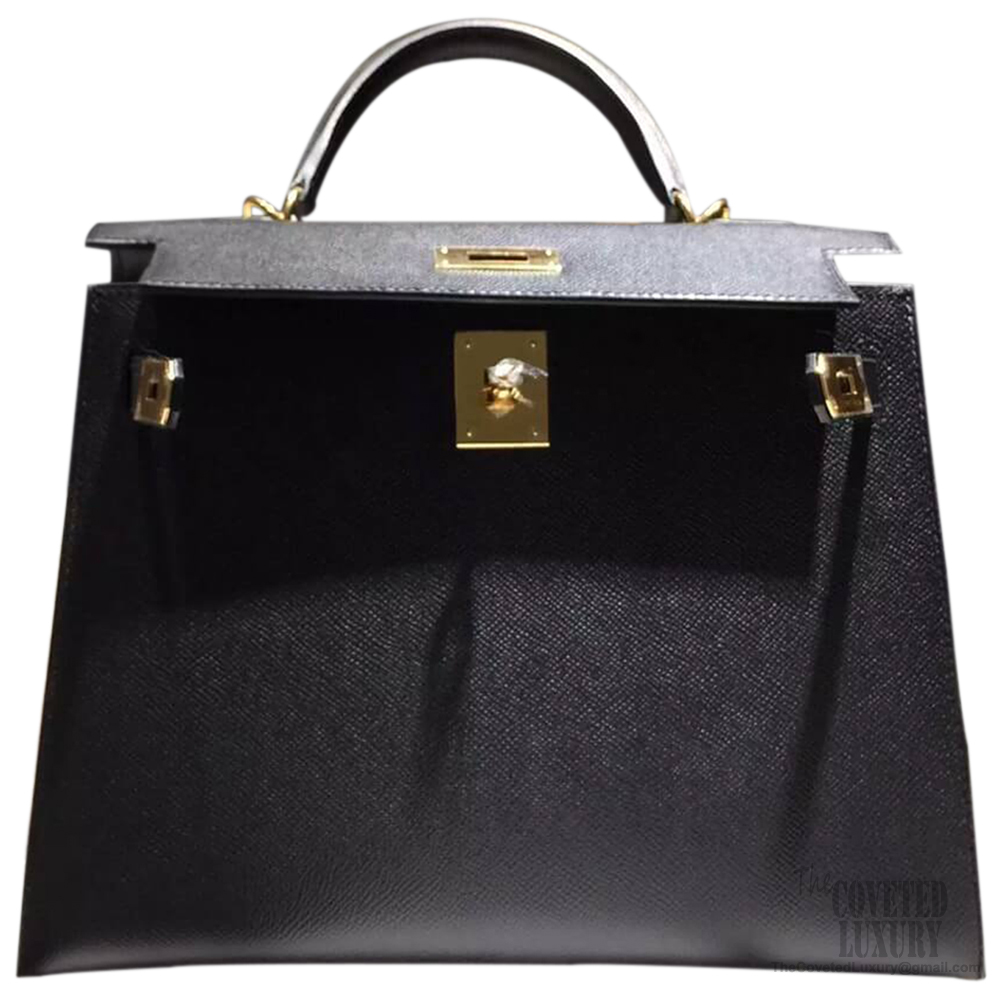
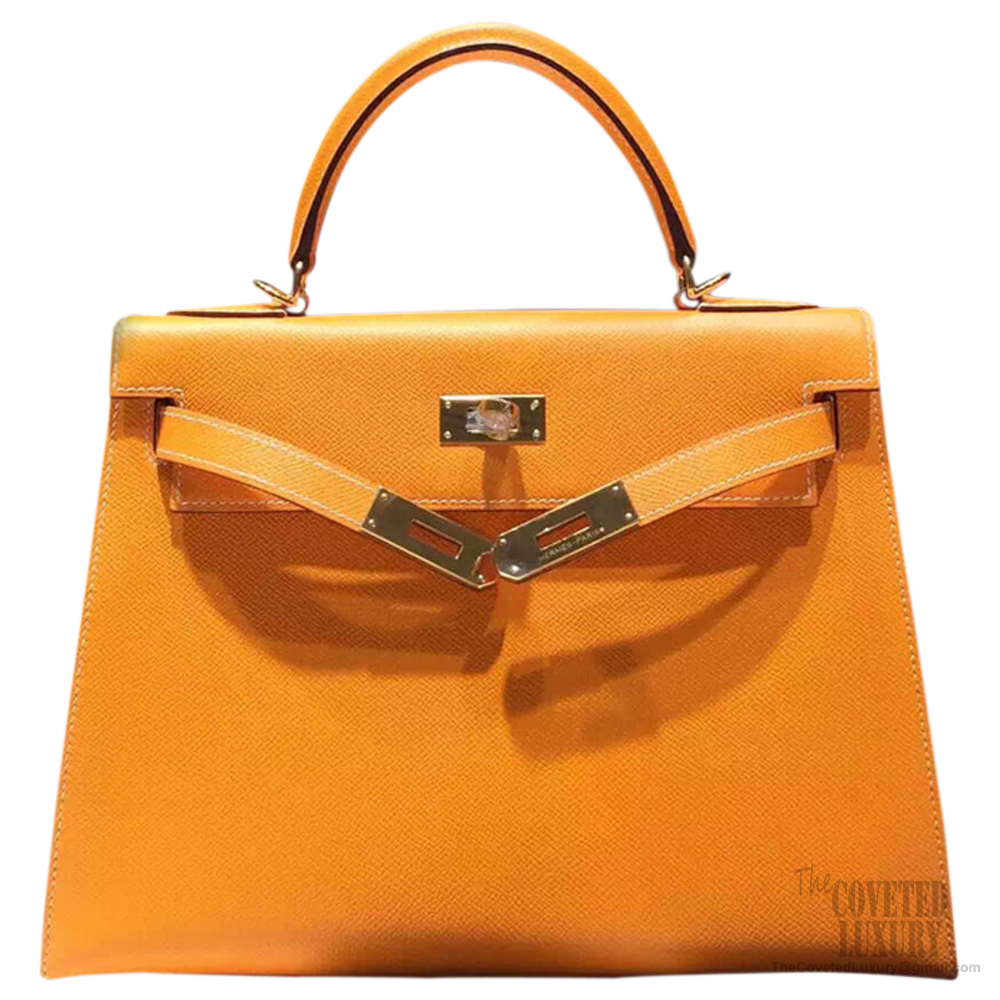
Epsom is particularly well suited to the Kelly Sellier and Constance, where geometric definition is central to the design. The crisp profile of a Hermes Kelly 28 Black Epsom Leather GHW demonstrates the leather’s architectural effect, while a saturated option such as the Hermes Kelly 28 Jaune 9V Epsom Leather GHW shows how clearly it presents color.
Hermès Taurillon Clémence leather: soft, substantial and relaxed
Taurillon Clémence entered Hermès collections in 1992. It is deeply drummed, with a broad, irregular grain, semi-matte finish and yielding hand. It is sometimes confused with Togo, but Clémence usually looks softer and less sharply pebbled. When handled side by side, it also tends to feel heavier and more pliable.
Clémence is a strong everyday material in the sense that its pronounced grain can conceal small scratches and routine handling. Its main considerations are weight, water sensitivity and shape. A larger bag in Clémence can become substantial once hardware and contents are added. With use, the leather becomes increasingly supple and may develop pronounced slouch.
That evolution should not automatically be interpreted as deterioration. On the right design, it is part of the appeal. Clémence allows panels to fold and drape naturally, producing an understated, tactile character that would be difficult to achieve in Epsom. It is less suitable for someone who expects a bag to stand rigidly or wants to minimize carrying weight.
Clémence is an especially natural choice for the Lindy and Picotin. Both designs benefit from softness rather than strict geometry. Owners should nevertheless protect it carefully from rain: water contact may produce visible marks, and no grained surface should be treated as waterproof.
Hermès Swift leather: smooth, supple and rich in color
Swift also appeared in 2004 and was named in reference to its resemblance to the earlier Gulliver calfskin. It has an extremely fine grain, a softly lustrous finish and a tender feel. From a normal viewing distance it can appear almost smooth, creating a cleaner and more luminous field of color than the three visibly grained alternatives.
This is the leather for buyers who prioritize touch and color depth. Bright shades can look saturated, while neutral colors acquire a subtle glow. Swift also flexes easily and becomes more supple over time, so it works best on designs where softness is welcome.
Its smoothness makes wear easier to see. Fingernail scratches, rubbing, pressure marks and water spotting may be more noticeable than on Togo or Clémence. Swift should not be described as inherently too delicate for regular use, but it suits an owner who is comfortable with visible patina and willing to be more deliberate about placement and storage.
On a bag with large uninterrupted panels, marks have nowhere to hide. Smaller or naturally curved designs can therefore be more forgiving. Swift is a compelling alternative for a compact Lindy or a softer Constance, provided tactile pleasure and color are more important than maximum scratch concealment.
Which leather is best for each Hermès bag?
Birkin: Togo for balance, Epsom for structure
Togo is the strongest all-around Birkin choice. It supports the body without making it rigid, and its grain is practical for a bag carried by hand and frequently set down. Epsom is better for buyers who want less leather weight and a cleaner, more upright silhouette.
Clémence creates a deliberately soft Birkin but can feel heavy, especially in larger sizes. Swift offers exceptional color but exposes a broad smooth surface to scratches and pressure marks. It is the more appearance-led choice rather than the default for demanding daily use.
Kelly: construction matters as much as leather
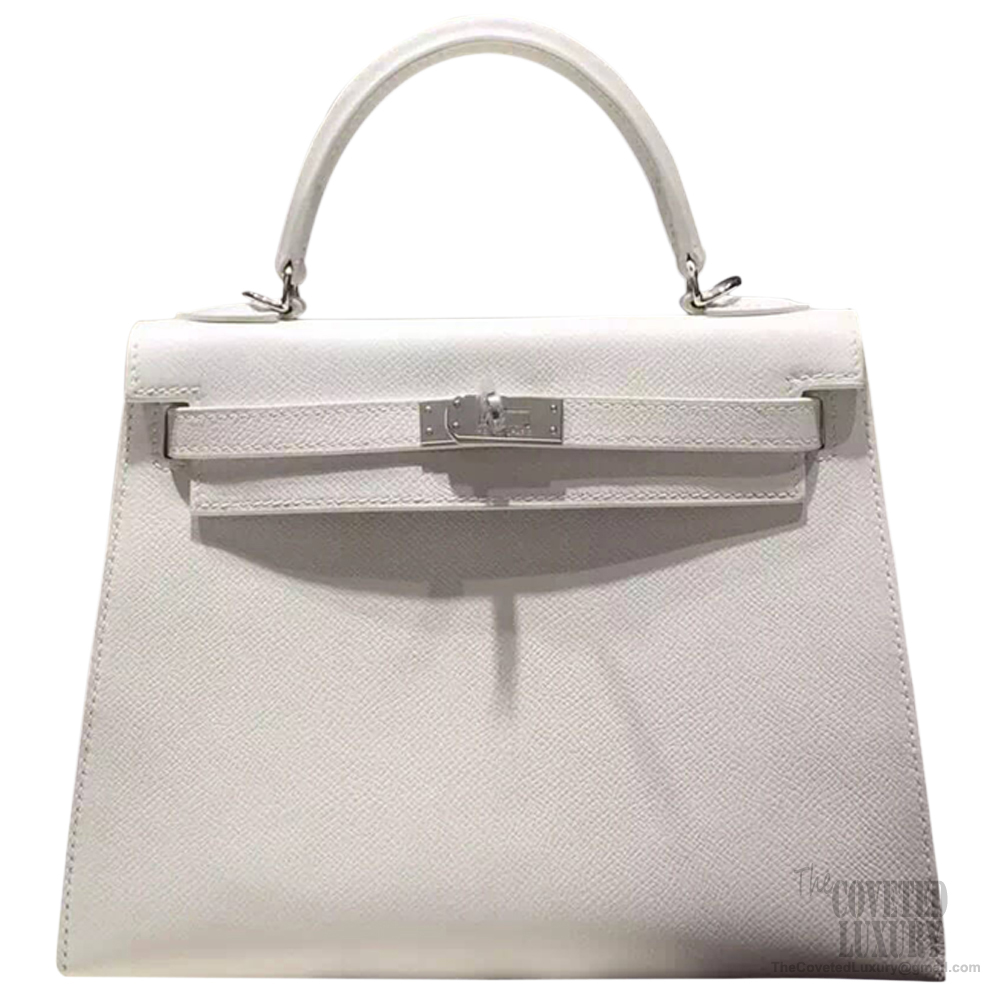
The Kelly Sellier has external seams, defined edges and a formal geometric profile. Epsom reinforces those qualities, making it the clearest recommendation for a crisp Sellier. The Hermes Kelly 28 White Epsom Leather SHW is a useful example of how the regular grain supports a precise silhouette.
The Kelly Retourne has inward-turned seams and rounder edges. Togo complements this softer construction while retaining enough body to avoid immediate collapse. Clémence is an alternative for buyers who actively want more drape. Swift offers softness and color but requires greater acceptance of visible surface wear.
Constance: Epsom keeps the shape precise
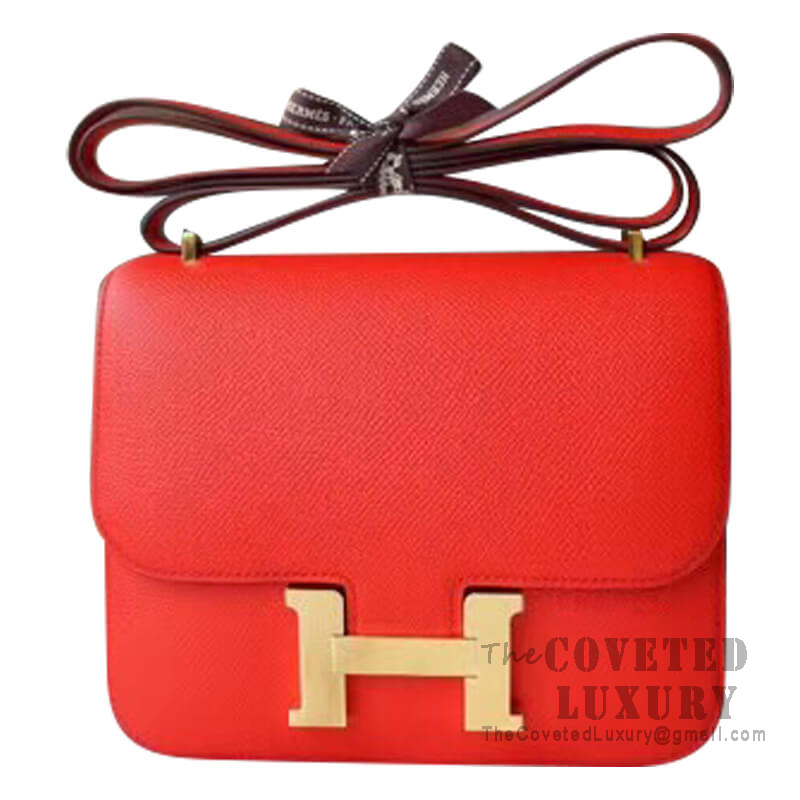
The Constance benefits from Epsom’s rigidity because the leather stabilizes its rectangular body and flap. The Hermes Mini Constance 18 Rouge de Coeur Epsom GHW also demonstrates the material’s capacity for clean, saturated color.
Even in Epsom, wear can develop around the corners, flap, strap attachments and prominent clasp. Swift is a softer alternative, but scratches and impressions are likely to be more apparent.
Lindy: Clémence complements the intended drape
Clémence is the most natural match for the Lindy. The design is meant to curve, fold inward and sit softly against the body, all of which the yielding leather supports. Swift can work beautifully in smaller sizes, offering a smoother finish and rich color. Epsom is generally less harmonious because its rigidity works against the Lindy’s movement.
Picotin: Clémence for a relaxed bucket shape
The unlined Picotin places leather at the center of its design. Clémence allows its open bucket body to settle naturally and become more personal with use. Togo is a sensible alternative when a little more body is desired. Epsom is not the intuitive choice for a shape that depends on softness rather than crisp construction.
What is the best Hermès leather for everyday use?
For most buyers, Togo offers the best balance of resilience, moderate weight, tactile grain and controlled relaxation. It is particularly persuasive for a frequently carried Birkin or Kelly Retourne.
Choose Epsom instead if low weight and shape retention are your priorities. It is practical for commuting and organized daily routines, although rigid leather can show dents differently from a flexible hide. Choose Clémence if you enjoy a substantial, soft bag and regard increasing slouch as character rather than a fault. Choose Swift if rich color and a smooth hand matter most—and light scratches will not diminish your enjoyment.
Color also affects practicality. Pale shades may reveal transfer and grime sooner, while very dark smooth leather can make scuffs more conspicuous under direct light. Evaluate leather, color and bag construction as one combination rather than three separate decisions.
How to care for all four leathers
Hermès’ official leather-care guidance emphasizes prevention rather than home restoration. Sensible care includes:
- Keep the bag away from rain, oils, perfume, cosmetics, ink, alcohol-based products and intense heat.
- If water touches the surface, blot it promptly with a soft, lint-free cloth. Do not rub aggressively or apply direct heat.
- Avoid overfilling. Heavy or irregular contents can stretch handles and distort panels, especially in Clémence and Swift.
- Store the bag in its dust cover in a dry, dark and temperate space.
- Support the interior lightly with clean, soft stuffing without forcing the bag into an unnatural shape.
- Do not apply leather wipes, waterproofing sprays or commercial conditioners without professional advice.
- Seek qualified after-sales care for stains, deep scratches, damaged corners or structural problems.
The right goal is not to prevent every sign of ownership. It is to avoid unnecessary damage while allowing the leather to age in the way its character naturally encourages.
The final verdict
Hermès Leather Guide: Togo vs Epsom vs Clémence vs Swift
Togo is the most balanced option, Epsom the lightest and most structured, Clémence the softest grained choice, and Swift the smoothest and most color-enhancing. For a Birkin or Kelly Retourne, begin with Togo. For a Kelly Sellier or Constance, Epsom is usually the strongest match. For a Lindy or Picotin, Clémence delivers the intended relaxed movement. Swift rewards a careful owner who values softness and luminous color above scratch concealment.
The best Hermès leather is ultimately not the one with the longest list of strengths. It is the one whose weight, texture and aging pattern support both the bag’s design and the way you genuinely intend to carry it.